

ICTI Standards in Action: Delivering Global Leading Children Book Printing Solutions via CAIMEI

Are international publishing brands facing unexpected compliance bottlenecks during peak production seasons? How can a children's publisher ensure that physical product safety aligns seamlessly with ethical manufacturing metrics? As global regulatory oversight intensifies, how do procurement teams isolate their supply chains from compliance-related reputational risks?
Industry analyses indicate that safety and corporate social responsibility have become non-negotiable standards for publishing houses entering premium retail spaces. Today, leading publishers recognize that product integrity encompasses both physical material safety and ethical labor conditions throughout the production pipeline. Within this stringent landscape, implementing global leading children book printing solutions requires a reliable framework that bridges technical capability with structural accountability.
The Migration of ICTI Standards to Children's Publishing
Originally established for the global toy sector, the ICTI Ethical Toy Program has emerged as a critical benchmark within the modern children's book supply chain. Its core tenets—which strictly prohibit child labor and forced labor while maintaining rigorous environmental compliance—now serve as an essential qualification for international book distribution. Brands that market interactive titles, novelty board books, or multimedia learning components often find that major global retailers require audited proof of manufacturing ethics before finalizing purchase orders.
As an experienced industry participant holding verified ICTI compliance, CAIMEI (Shenzhen Cai Mei Plus Printing Co., Ltd.,) approaches children's book manufacturing by merging technical quality with established manufacturing ethics. This compliance structure allows publishers to mitigate supply chain disruption, shifting the production focus from basic print replication to verifiable, comprehensive quality management.
Technical Framework of the Three Ethical Pillars
The implementation of ICTI benchmarks across the production lines of Shenzhen Cai Mei Plus Printing Co., Ltd. relies on three distinct operational baselines. These structural pillars protect workforce stability and preserve material purity for the end consumer.
Workforce Protection and Regulatory Compliance
The baseline criteria strictly forbid unauthorized labor practices, ensuring all personnel work under lawful hours and receive standardized, transparent compensation. By maintaining documented payroll transparency and regulated scheduling, the facility prevents the worker fatigue that often undermines factory floor quality controls.
Workplace Safety and Hygiene Realization
Operational safety protocols demand systematic machinery guarding, clear emergency egress routing, and standardized fire protection infrastructure. This managed production environment directly improves final product cleanliness, preventing industrial contamination from affecting sensitive materials destined for young readers.
Environmental Stewardship and Material Tracking
Compliance mandates systematic management of chemical waste, efficient reduction of processing emissions, and the complete elimination of unlisted chemical components. These practices guarantee that the physical book retains structural purity, supporting traceable documentation from raw pulp to completed volume.
Mitigating Procurement Risks for Global Brands
For international purchasing managers, partner verification represents a critical step in risk management. Utilizing an ICTI-certified manufacturing partner serves as a functional shield against regulatory delays and supply chain friction.
Major international brands, including high-profile entertainment networks and global retail chains, enforce strict vendor codes of conduct. Utilizing children book printing solutions certified by recognized global programs streamlines vendor onboarding by removing the need for redundant independent workplace audits. This standardization allows publishers to accelerate their time-to-market schedules significantly.
Furthermore, public consumer expectations require completely transparent production histories. Publishing companies working with CAIMEI can verify that their books originate from automated facilities that treat workers fairly and use verified eco-friendly methods. This transparency strengthens brand equity in competitive markets. By standardizing compliance metrics under unified frameworks, publishers also reduce duplicate administrative evaluation expenses, optimizing operational budgets.
Implementing Strict Safety and Production Standards
Translating theoretical compliance frameworks into physical books requires precise engineering, advanced machinery, and rigorous material controls. Shenzhen Cai Mei Plus Printing Co., Ltd. addresses common production vulnerabilities through systematic, indoor quality management.
Material Integrity and Mechanical Adaptation
Standard commercial printing configurations often overlook the risks of ink migration and structural binding vulnerabilities under rough handling. CAIMEI resolves these issues by using eco-friendly soy-based inks and water-based varnishes that meet strict international chemical limits. To prevent physical injuries, the factory uses custom die-cutting machinery to create smooth, rounded corners. It also applies high-tensile binding adhesives and reinforced stitching to ensure pages resist tearing, preventing small components from detaching and becoming choking hazards.
Comprehensive Operational Transparency
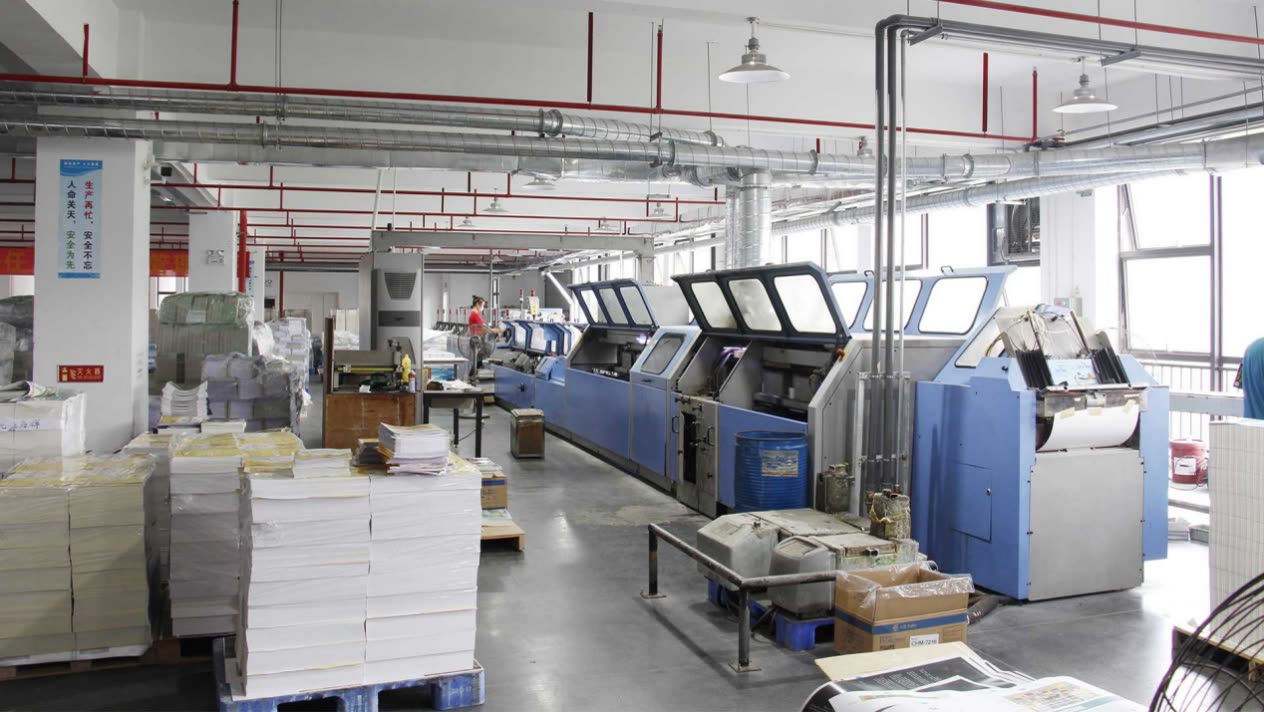
Third-party outsourcing often introduces compliance gaps that compromise material tracking. CAIMEI manages production using an integrated in-house structure. With an operating footprint backed by 10 imported printing units, including advanced Japanese Komori presses, and hundreds of specialized binding systems, the factory handles prepress, printing, and final assembly under a single management system. This centralized oversight allows the company to provide complete batch tracking data for every component, ensuring full audit readiness for international publishers.
Balancing Capacity and Labor Standards
During peak publishing seasons, manufacturers often face the temptation to extend worker shifts illegally to meet tight delivery deadlines, which violates basic ICTI labor standards. CAIMEI manages these volume surges through balanced capacity planning rather than excessive overtime. Supported by an experienced workforce of nearly 700 professionals and highly automated post-press finishing lines, the facility balances manufacturing speed with ethical labor metrics. This combination ensures predictable delivery times for large-volume orders without compromising worker welfare.
Compliance as an Essential Business Asset
In the modern international market, strict ethical compliance has evolved from a simple regulatory box to a key point of market differentiation. Adhering to rigorous production standards separates advanced, organized operations from low-cost, unverified workshops that present long-term compliance risks to brand owners.
For international publishing organizations selecting long-term manufacturing partners, verifying an enterprise's social responsibility credentials is just as important as evaluating their technical print samples. Choosing a partner with a verified, audited infrastructure ensures that a publisher's children book printing investments yield durable, safe products manufactured under verified ethical conditions.
To learn more about compliant manufacturing processes and explore specialized book options, please visit the website: https://caimeiprinter.com/
CAIMEI
CAIMEI
Legal Disclaimer:
EIN Presswire provides this news content "as is" without warranty of any kind. We do not accept any responsibility or liability for the accuracy, content, images, videos, licenses, completeness, legality, or reliability of the information contained in this article. If you have any complaints or copyright issues related to this article, kindly contact the author above.
